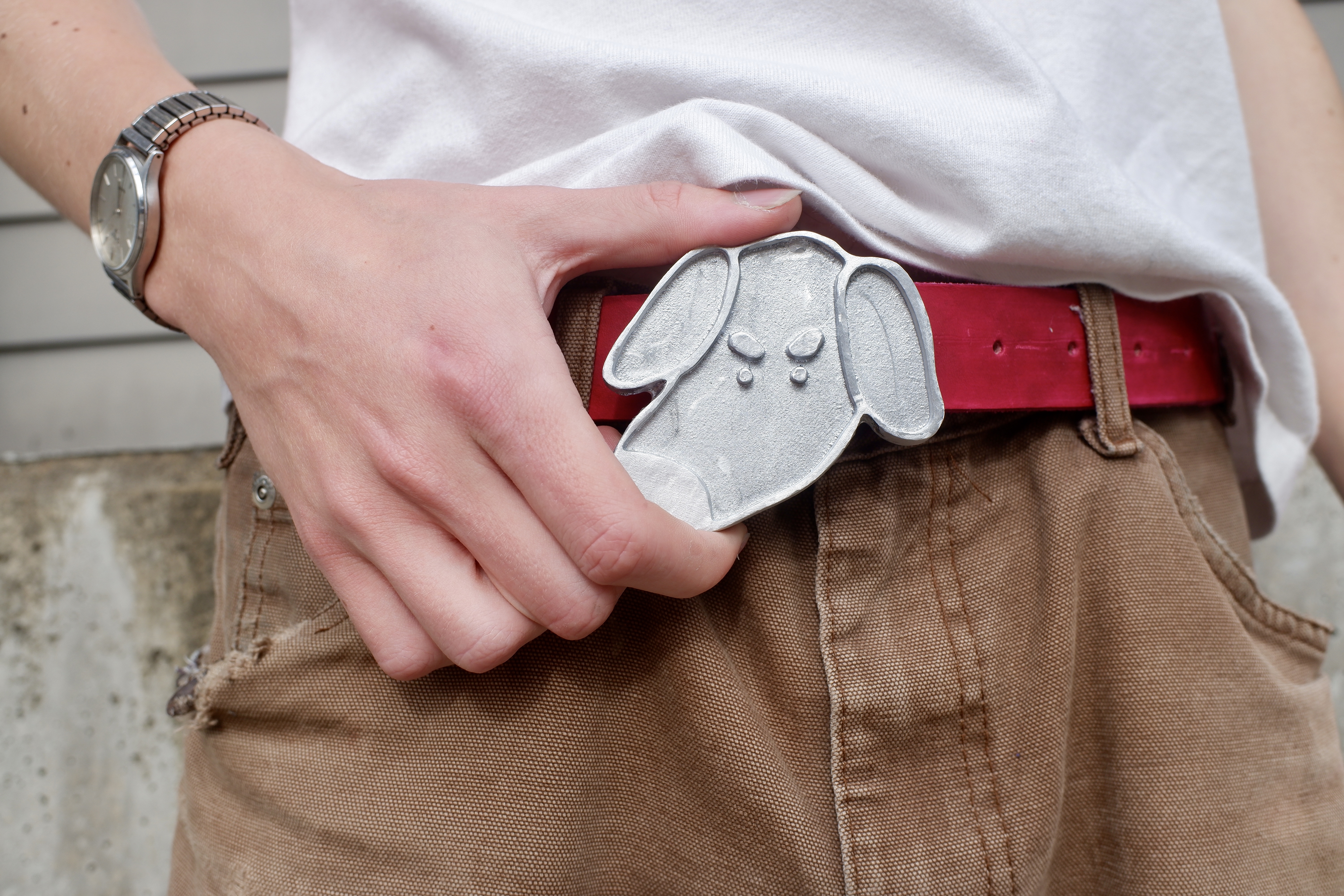
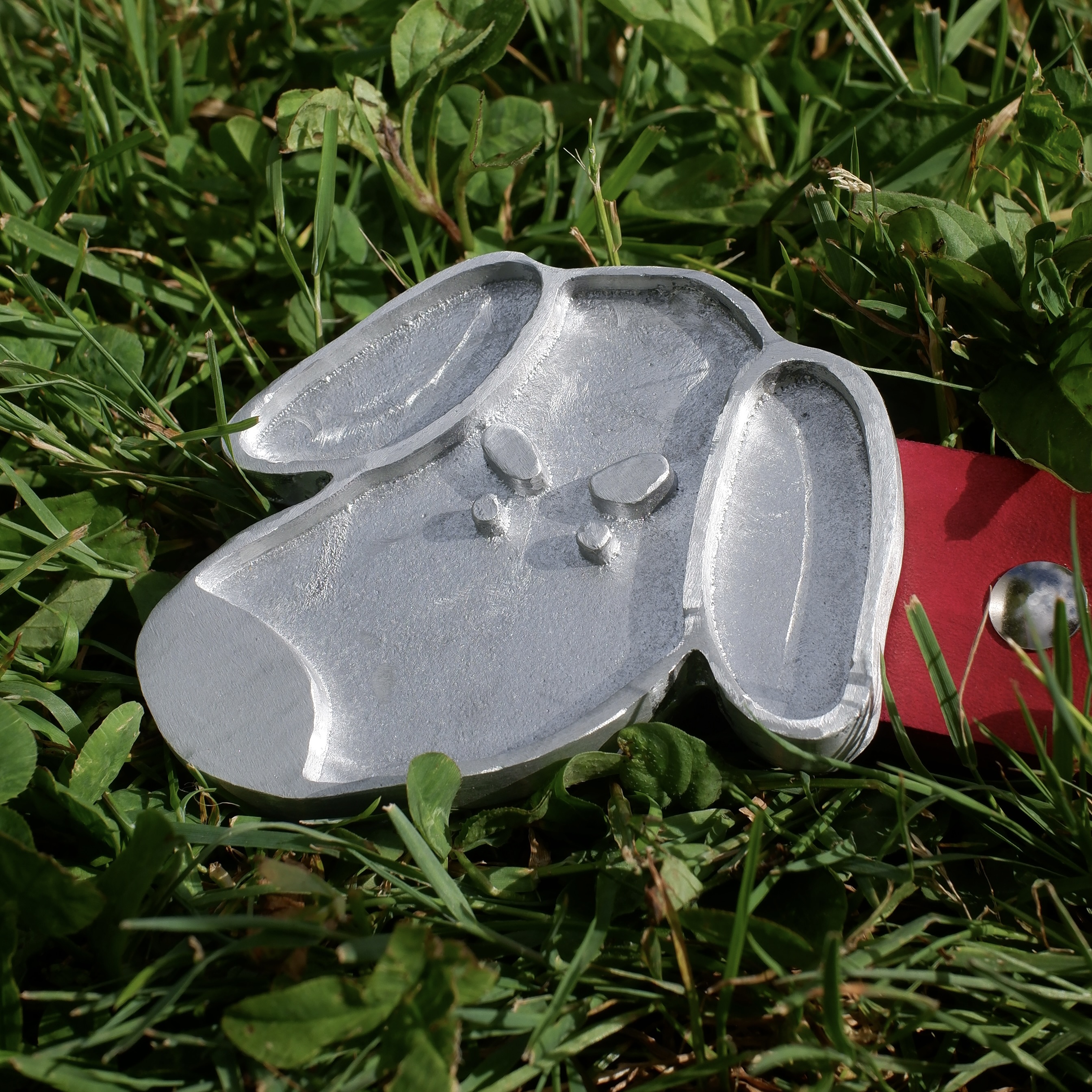
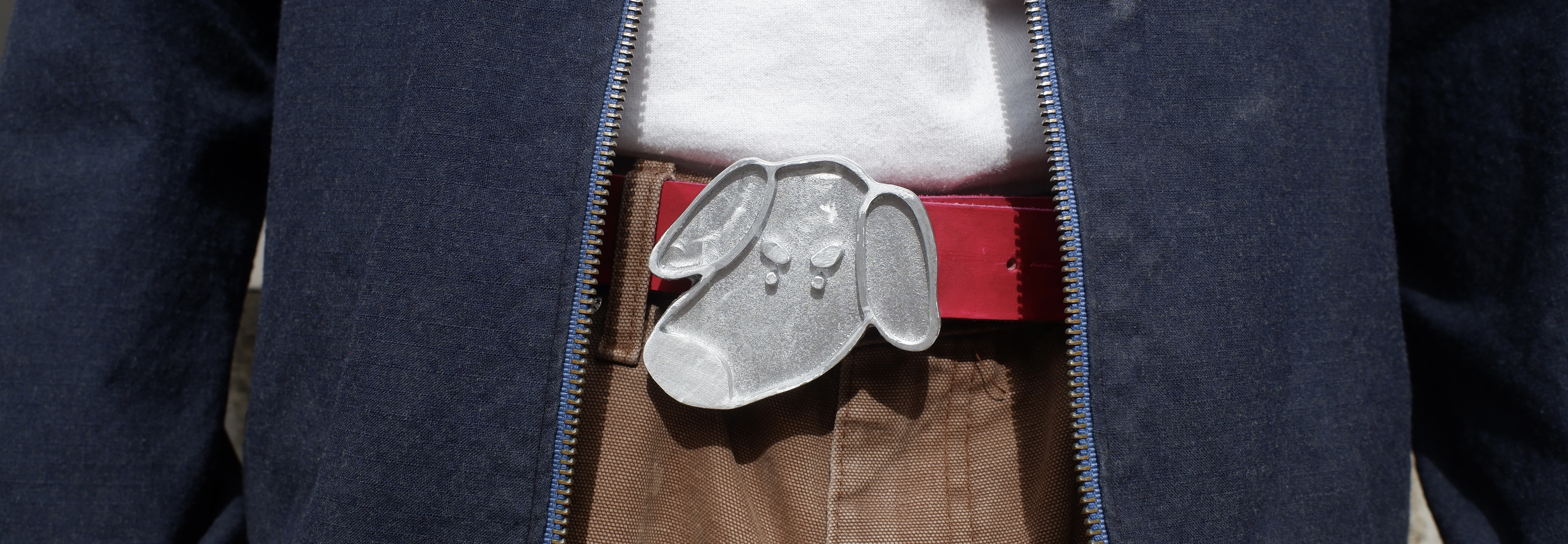
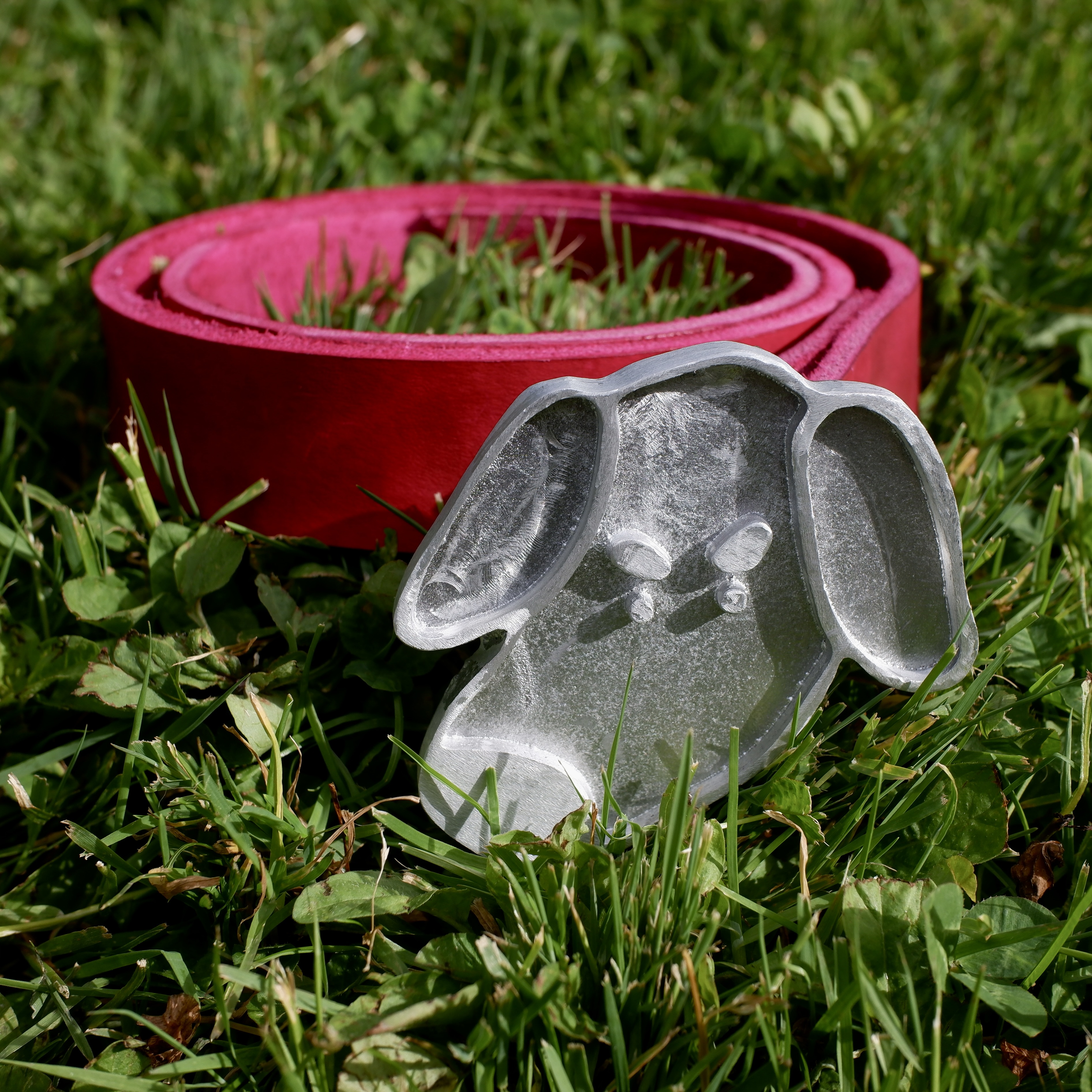
A sand cast aluminum belt buckle based on a doodle of my dog Oden. Designed for manufacturing, with every part sourced, cut, dyed, and assembled by hand.
Overview
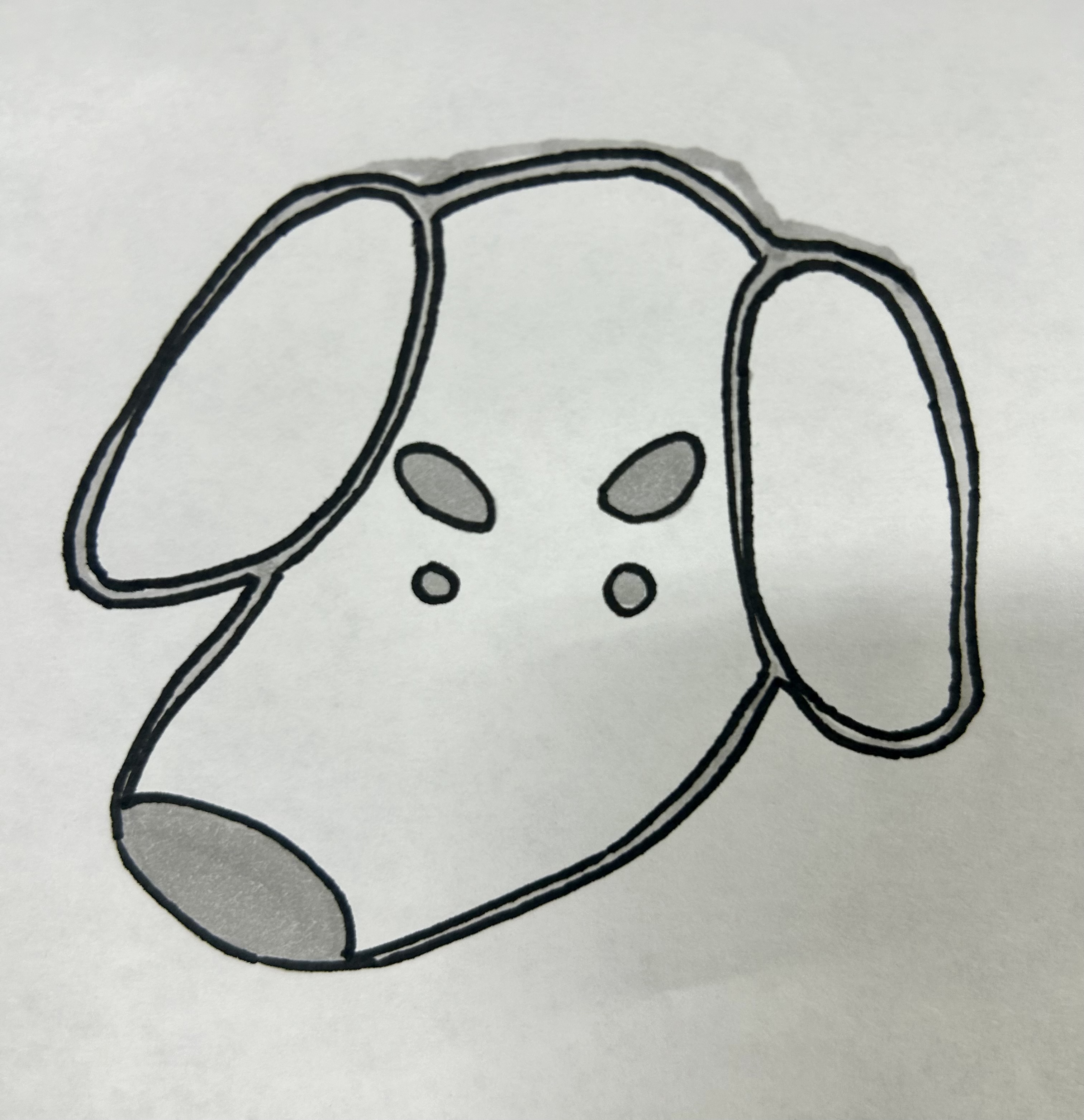
This project came out of a studio focused on design for manufacturing. The brief was to design a belt buckle for sand casting. I started with a doodle I already draw all the time, a simplified cartoon face of my dog Oden, with his ears and a recognizable expression. Taking something that personal and turning it into a manufactured object was an interesting design problem because the drawing had to survive being translated into a sand mold and then cast in aluminum without losing what makes it read as Oden.
Beyond the buckle itself, I sourced all the hardware, cut and dyed the leather belt, and assembled everything myself. Communicating with Oregon Pattern and Foundry in Eugene throughout the process was a big part of the project. Understanding what they needed from me in terms of draft angles, wall thickness, and surface finish requirements shaped a lot of the design decisions early on.
Process
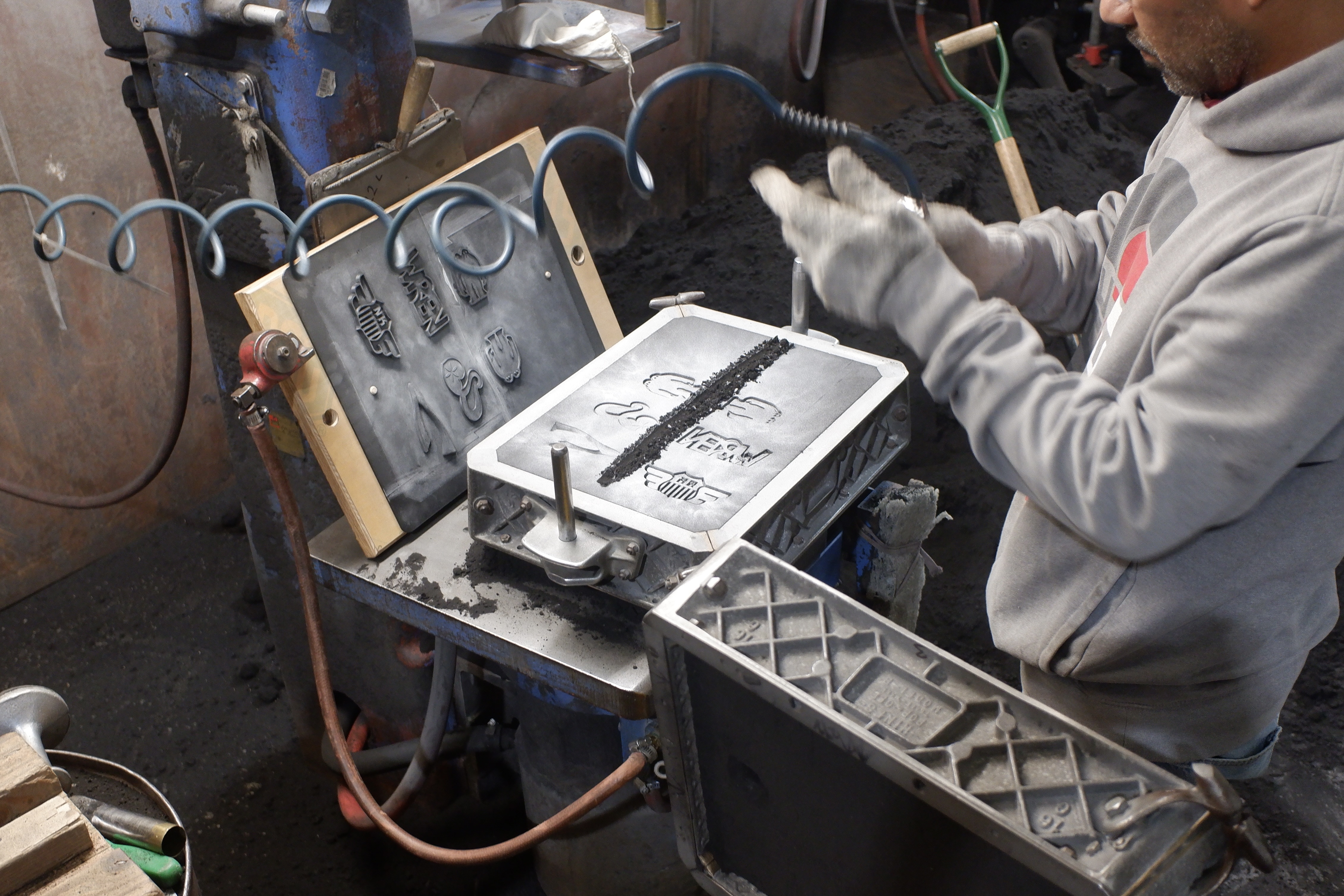
The pattern for the mold was made from the Oden drawing, translated into a physical form that the foundry could pack sand around. Getting the geometry right for sand casting meant thinking carefully about draft angles so the pattern would release cleanly from the sand without pulling the mold apart.
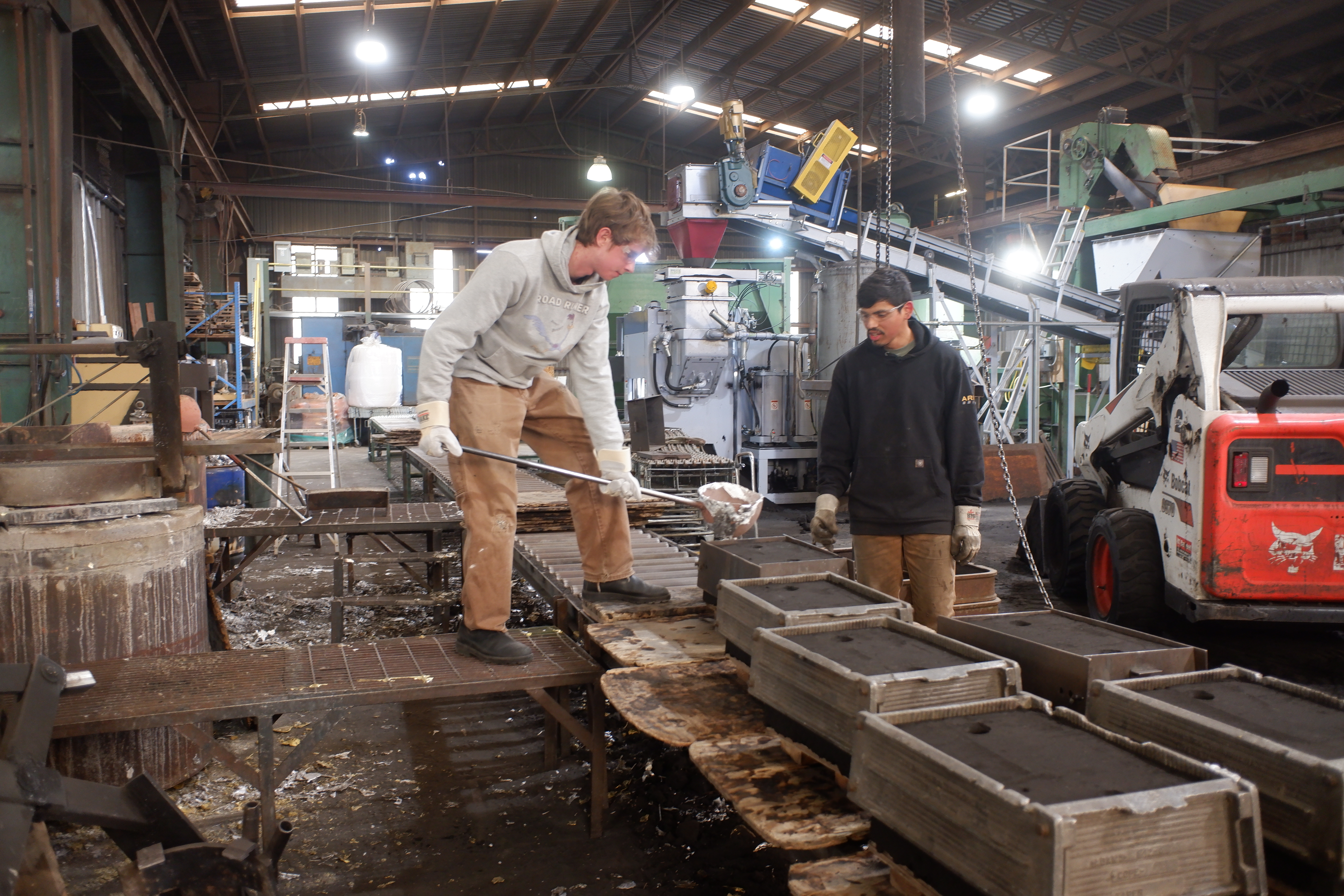
Oregon Pattern and Foundry taught me how to pour the aluminum myself which was a really cool experience. The molten metal goes in through a runner system and fills the cavity left by the pattern. Getting to do it myself made the manufacturing considerations very real. Everything you got wrong in the design shows up here.
Once the aluminum cools the sand mold is broken open. The casting comes out rough and still attached to the runner system. This is the first moment you see whether the design worked. The Oden face read clearly which was the main thing I was watching for.
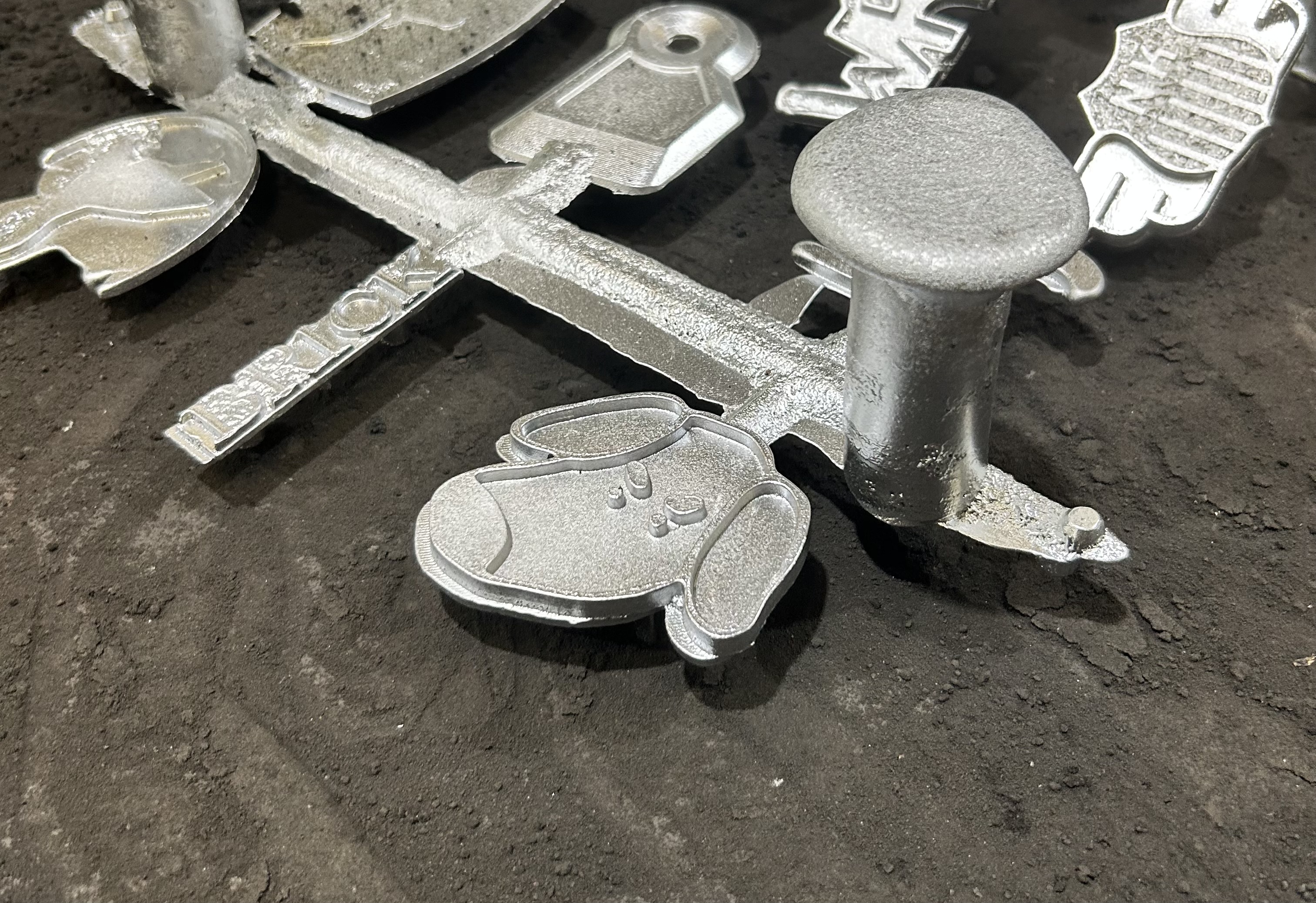
The runner is the channel the aluminum flowed through to fill the mold. It comes out attached to the casting and has to be cut off. Where you place the gate in the design affects how much cleanup work you have afterward, so this was something I thought about during the design phase.
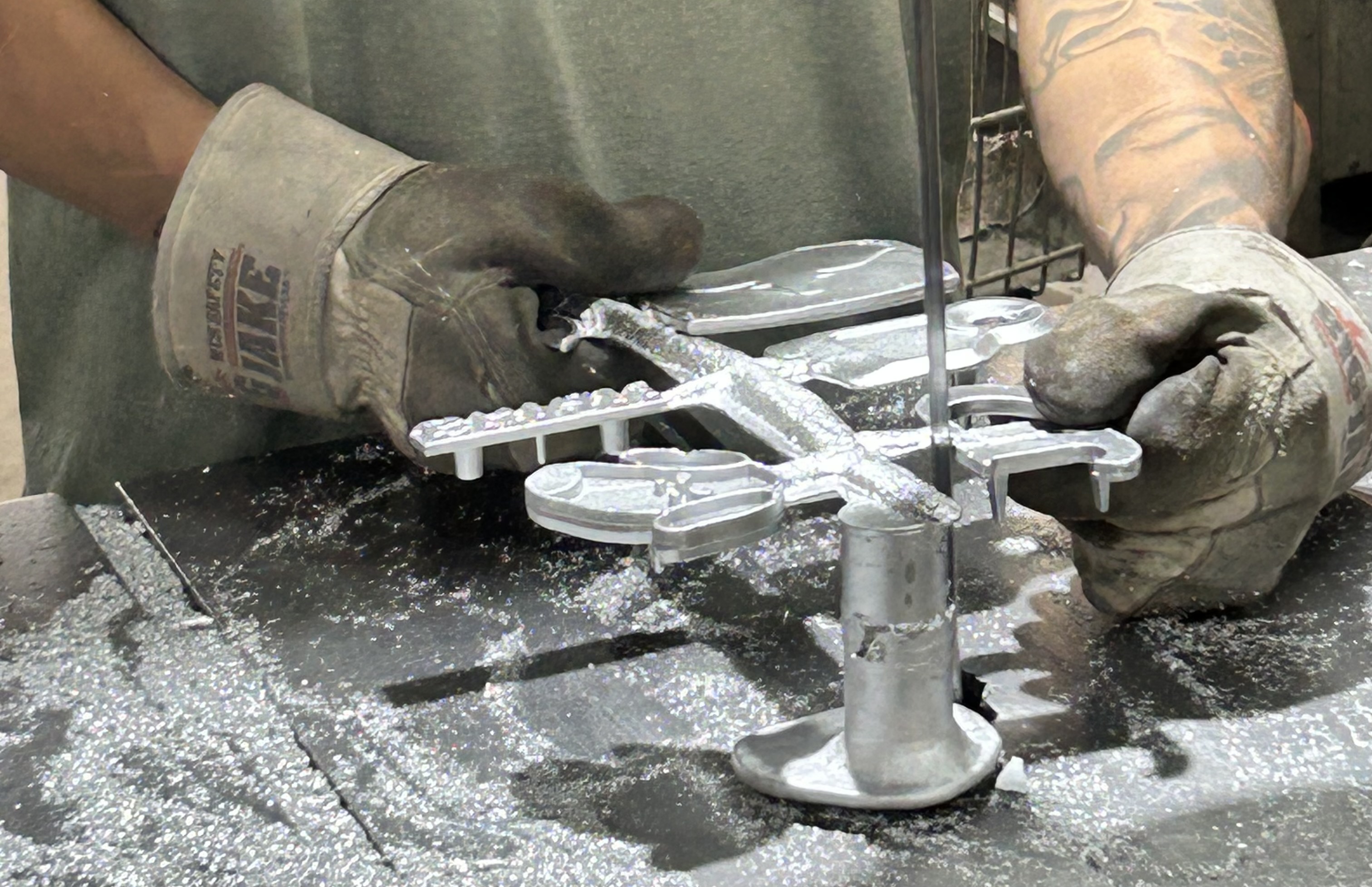
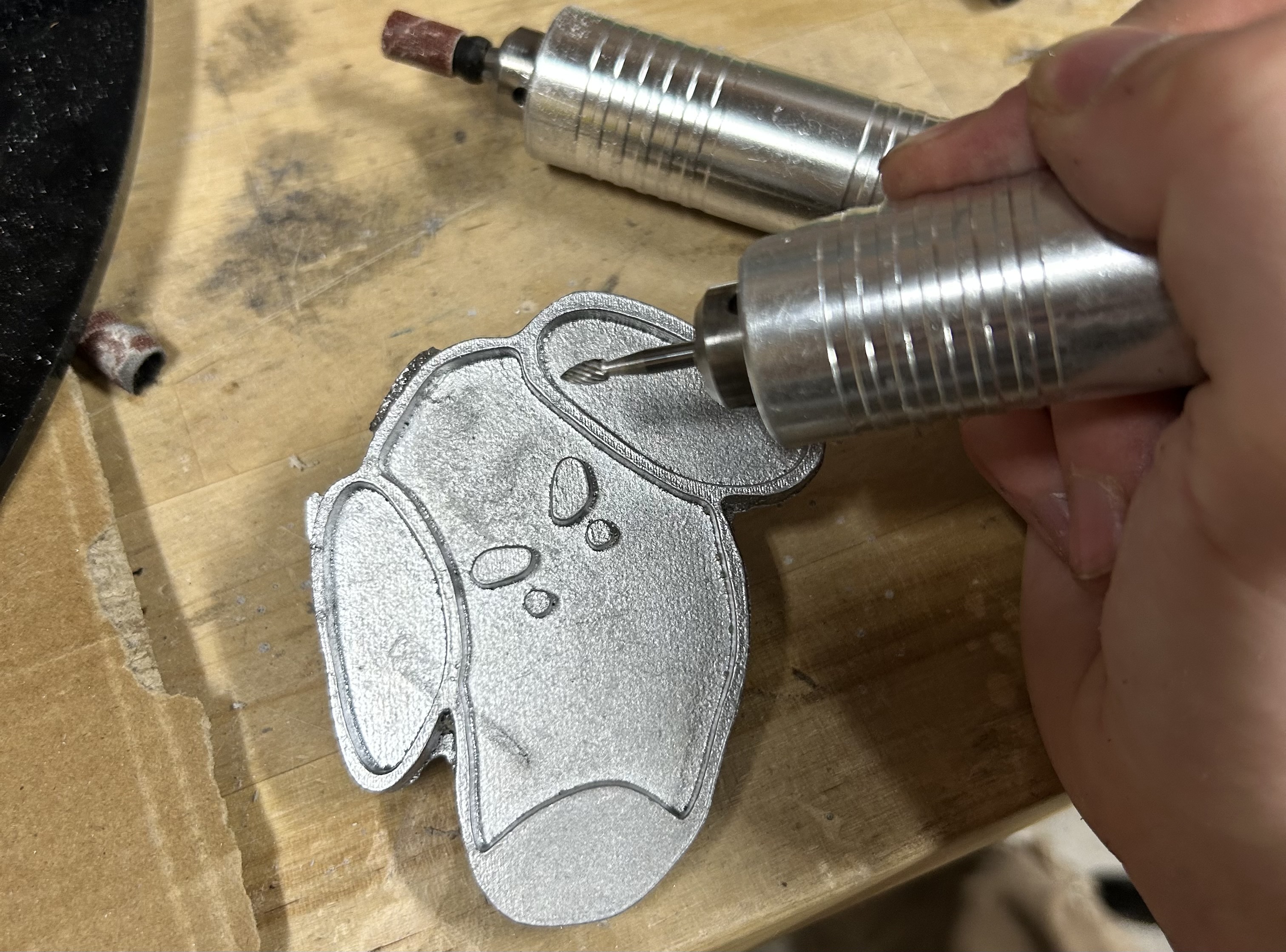
Sand castings come out with a rough surface texture that needs work. I filed, sanded, and polished the buckle down through progressively finer grits to get the finish I wanted. The goal was to keep some of the character of the casting while cleaning up the edges and making the Oden face read sharply.
The Belt
I sourced all the hardware including the buckle bar and keeper, cut the leather strap to length, dyed it, and assembled everything. It was really satisfying to end up with a finished product that I actually wear all the time.